


WAIFU
Magazine
A critical publication for imperfect characters and the people who love them.
This month: women who almost loved. Not the ones who got the happy ending—the ones who reached for it and felt it slip through their fingers because the world taught them wanting was dangerous before it taught them anything else. Reze had a flower in her hand and a script in her head and chose the flower, for about five minutes. Makima wanted connection so badly she could only express it as control. Power didn't know what love felt like and died trying to learn. We're less interested in who's "best girl." We're much more interested in what it costs to want something you were never meant to have.


BEHIND THE SCENES
POWER POSE
Step inside our June cover shoot. What makes Reze a supermodel and a super woman? First, she arrived for her shoot in Tokyo ready for anything (like an Odd WAIFU Magazine live cover). Second, she posed like a pro in rain, thigh-high slits, leather and ribbons. Third, she graciously answered fan questions on Instagram and Twitter throughout the day and posed for behind-the-scenes snaps and videos, all the while sipping green tea and chatting warmly with the crew about her life in the Soviet Union. Continue to her feature, where Reze talks with editor-in-chief Odd Orion about her legendary Reze Arc film and what she has learned along the way.

LATEST & GREATEST
STYLE SCOOP
What's cool, cutting edge, & important.
REQUIRED READING
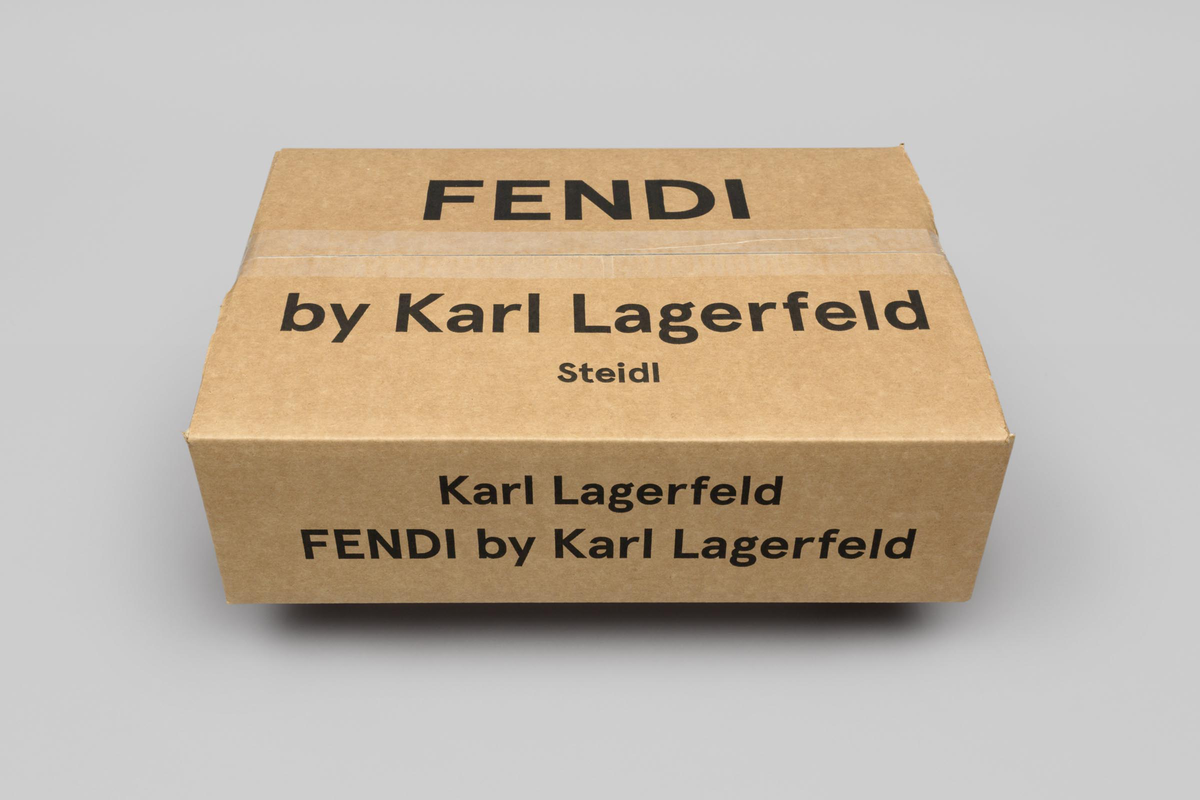
FENDI BY KARL LAGERFELD
For those who cannot visit the elegantly restored mid-century Palazzo della Civiltà Italiana, home of Fendi’s Roman atelier, you can nab the next best thing: a first-class ticket into the mind of Karl Lagerfeld, who celebrated his 50th anniversary as artistic director of the brand with German publishing house Steidl releasing a compilation of the designer’s fashion sketches, logo designs and exclusive interviews—all in one stylish package ($2,840.78, steidl.de)
NEWS FLASH
DESIGNER COLLABS WE
HAVE OUR EYES ON
THIS SEASON

Japanese pop-surrealist artist Aya Takano has reinvented Fendi’s Baguette Pouch with whimsical anime illustrations for Spring/Summer 2026; Pokémon has got you covered with a special Fendi Collection available at MixTHINKS; and streetwear brand NIKE is launching a covetable capsule with One Piece in the form of devil-fruit inspired sneakers.

WAIFU RADAR
TRACKING THE BEST IN MOVIES, MUSIC, LITERATURE & ART
This month's most discussed musicians, authors, & artists. will have you daydreaming.


SHOP
READY
OR
NOT!

After seemingly endless days of coats and boots, there’s nothing quite like slipping into a couple of ounces of Lycra, strapping on some sandals, and calling yourself dressed. In anticipation of those hot, heady summer days, we’ve combed the swimwear seas in search of suits that satisfy every type—aesthetic and body—from bold-hued bikinis and über-sexy maillots to beachy tropical prints and sleek monochrome basics. Whether your vacation destination necessitates East Coast prep or West Coast breezy, we’ve got you (somewhat) covered. All you need now is SPF!


MAD WOMAN
The Blood Fiend on accidental icon status, the Reze Arc, and why she's still here.
By Julie Ramsaram
When Chainsaw Man: The Movie – Reze Arc hit theaters in 2025 and turned Power into an international sex symbol overnight, she was already ancient by human standards and not particularly interested in the distinction. But in this month's Chainsaw Man manga—still running, still brutal, still somehow keeping her alive—the Blood Fiend is a positive disaster in her own right, playing the only version of herself she knows how to be: loud, hungry, and constitutionally incapable of pretending she doesn't want the last piece of meat."I have to escape Aki's lectures so he can't produce another disappointed sigh," says Power of the rich, emotionally confusing Reze Arc fallout. "It's a harsh world. But it was so realistic that I naturally fell into it. The beach. The ice cream. Denji telling a room full of people he wanted to touch my boobs. That part was less realistic. Who announces that?"
Though the Reze Arc cast included fan-favorites like Reze herself, Beam, and a briefly alive Denji who didn't know what was coming, it was the Blood Fiend's youthful willingness to try anything—coupled with those horns, that blood-construct hammer, and the infamous stuffed-boob bargain from the anime's early episodes—that caught original Chainsaw Man creator Tatsuki Fujimoto's attention during the character's initial design. It has held it ever since.
"I'd draw her being feral and selfish, and it was an instant switch into the performance," Fujimoto said in a 2023 interview with Anime Demon Weekly. "Then I'd finish the page, and I could imagine her smiling and laughing with Aki about something stupid. It's a way to stay relaxed in arduous circumstances. I first noticed it back with Denji, and now with Power. She's got that, and it's quite freakish."
The "panty fantasy" moment from the Reze Arc—Denji, mid-crisis, blurting out exactly what he wanted from her in front of everyone—became the thing that launched a thousand memes. Power, for her part, still doesn't understand what the big deal was.
"Humans are weird," she says, slouching in a chair that wasn't designed for slouching. "I said I'd let him touch them if he rescued Meowy. He did. Why is everyone still talking about it? I don't care about your weird fantasies. Unless they involve food. Then I'm listening."
Her most recent appearances in the manga—post-control, post-revival, post-everything—have given her a new kind of attention. Less about the bargains. More about the fact that she's still standing. In a series where death is a revolving door, Power has outlived almost everyone she started with. She doesn't talk about how. She just shrugs and asks if you're done with that.
"I'm 19 in human years if you round up and ignore most of the math," she says, grinning. "And I'm still here. Aki's not. Denji's been to hell and back. I've been to hell. Hell's fine. They have blood. I don't see what everyone's worried about."
When asked about her legacy—the memes, the merchandise, the fans who discovered Chainsaw Man because someone posted that scene on Twitter—she tilts her head like a confused animal.
"Legacy is for people who are dead," she says. "I'm not dead. I'm hungry. Do you have food? No? Then we're done here."
And then she's gone. The door swings shut. The room feels emptier.
That's the Power effect. You don't get an explanation. You get a demand. And somehow, you're still glad she showed up.

WHAT LIES BENEATH
After years of playing by the Soviet Union's rules, Chainsaw Man's Reze is writing her own.
By Saadia
There's an early chapter in Tatsuki Fujimoto's Chainsaw Man that positions Reze where we might expect her: As the sweet girl at the cafe, the one who blushes when Denji talks to her, the one who laughs at his jokes and asks if he's free later. Ostensibly, Reze is a love interest. Another girl in a series full of girls who want something from the boy with the chainsaw heart. "Reze is introduced as this almost impossibly perfect romantic fantasy," says a Public Safety analyst who studied her file after the incident. "She's attentive. She's forward. She initiates. For a kid like Denji, who's never been wanted by anyone, she's exactly what he'd fall for." But chapters later, after Reze bites Denji's tongue off in a kiss-turned-assassination-attempt and the ensuing battle levels half a city block, it's clear the girl at the cafe was a constructed identity. The real Reze was something else entirely.
It's a subtle shift—from love interest to antagonist, from fantasy to threat—but one that illuminates a dimension of the Bomb Devil hybrid that fans are still arguing about years later. Reze wasn't just another assassin sent by a foreign government. She was the one who almost didn't go through with it. And that near-miss is what makes her the most devastating character in a series built on devastation.
To get to the crux of the Bomb Girl's impact—described as "the arc that made readers realize Fujimoto wasn't playing fair" by critics and "the first time the series broke my heart" by fans—it's worth examining her origins. Born in the Soviet Union during an era of Cold War paranoia and military experimentation, Reze was taken as a child and raised as a weapon. She was trained in espionage, combat, infiltration, and assassination. She was made into the Bomb Devil hybrid through processes the Kremlin never declassified. By the time she appears in Chainsaw Man, she's been a soldier for most of her life and a girl for almost none of it.
Her mission was simple: acquire Denji's heart for the Soviet Union. The method was supposed to be simpler: seduce the target, isolate him, neutralize him. But something happened that her training didn't account for.
Reze's arc—from the cafe to the kiss to the school to the beach to the train platform—is a masterclass in character writing because it operates on two tracks simultaneously. On one track, she's performing. Every smile, every touch, every question about his day. She's reading Denji's loneliness and serving it back to him in the shape of affection. On the other track, something is happening that she can't control. She's recognizing him. Not the target. The person. A boy who was also raised as a tool. A boy who also doesn't know what it means to be wanted without the wanting being a weapon.
"I love you, Denji." She says it on the beach, after the battle, after she's already revealed who she is. She says it when there's no tactical advantage to saying it. She says it because she means it, and meaning it is the most dangerous thing a weapon can do.
Soviet Poem, by Reze — "Don't look at me. / Find me, / And kill me. / Only then / Will you / Be free."
The poem appears in her thoughts during the battle sequence, a fragment of her inner life that the Soviets never managed to strip out. It's a death wish and a love letter and a confession, all in six lines. Reze knows what she is. She knows what she was sent to do. She asks Denji to do what she can't: end her, and be free of her in the process. That's not villain dialogue. That's the sound of someone who was never given a choice realizing she's about to make one.
The moment she decides to run away with Denji. She dismantles her Soviet handlers. She fights her way free. She holds the flower—the symbol of a love she was never meant to know—on the train platform where she's supposed to leave with him and start a life neither of them was ever supposed to have. It's the moment where for all of her flaws, forgiveness is the hope held the tightest.
She never makes it back into his arms. Makima intercepts her. The rainbow fades. The near-miss becomes permanent.
This is why Reze is the cover girl for June. Not because she's the most popular Chainsaw Man woman—Makima holds that title. Not because she's the funniest—that's Power. Reze is the cover girl because she's the one who almost chose love over programming and paid for it with everything. She's the one who makes you wonder what would have happened if she'd made it to that cafe. If the rats hadn't come. If the girl who was raised as a weapon had been allowed to become something else.
Reze's true gifts—the ability to make her own explosives out of any part of her body, a mastery of close-quarters combat that rivals any hybrid in the series, and the emotional vulnerability that made her arc the most devastating in Part One—were only partly visible in her early appearances. But by the end of the Bomb Girl arc, there's a full portrait of a woman who was made into a monster and chose, for all of about five minutes, to be something else. "People see me as the assassin who almost killed Denji," Reze says. "Which makes it more painful to remember the part where I almost didn't."
0 comments